
Custom software
A clearer way to work.
Bring your workflows, people and data together in software shaped around the way your team works.
Explore softwareBuilt in Brisbane · Working Australia-wide
So we bring software, hardware and automation together, and turn worthwhile ideas into working systems your team owns.
See what that looks likeHow we get there
Useful technology starts with the people doing the work. Understand what they do day to day, and you can open up what they are able to do next.
Start with the people, the environment and the problem worth solving.
Combine the right disciplines. Test the system in practice.
Put a working system, documentation and the means to run it in your hands.
What we build
Build one part, or connect the whole system.
Custom software
Bring your workflows, people and data together in software shaped around the way your team works.
Explore softwareConnected hardware & IoT
Devices, connectivity and hands-on commissioning, built around the environment they run in.
Explore hardware & IoTAutomation
Automate the repetition, not the judgement. Your people configure the work and review the results.
Explore automation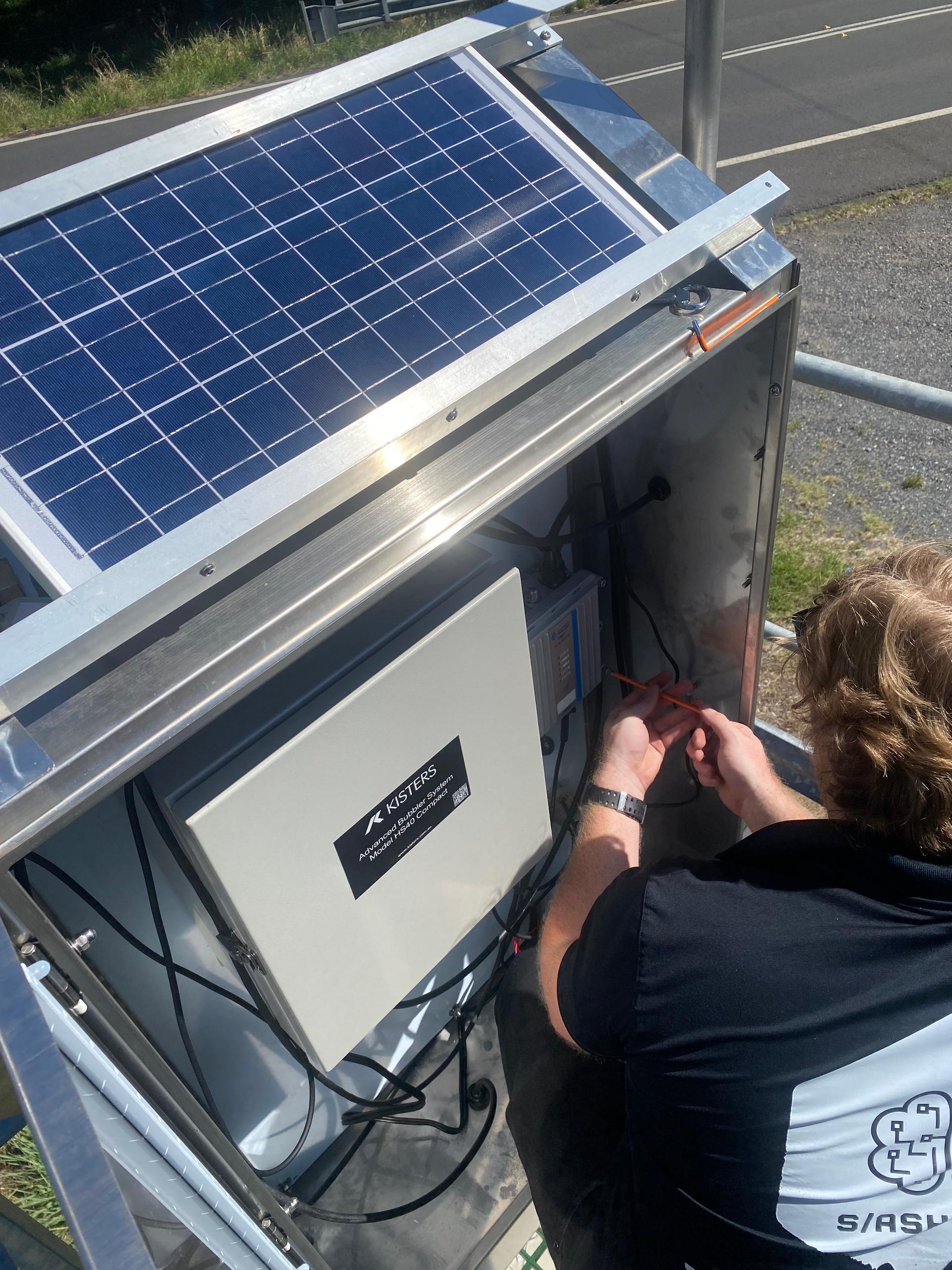
Connected hardware & data
Different device formats brought into one consistent feed for the wider flood warning system.
Explore the flood network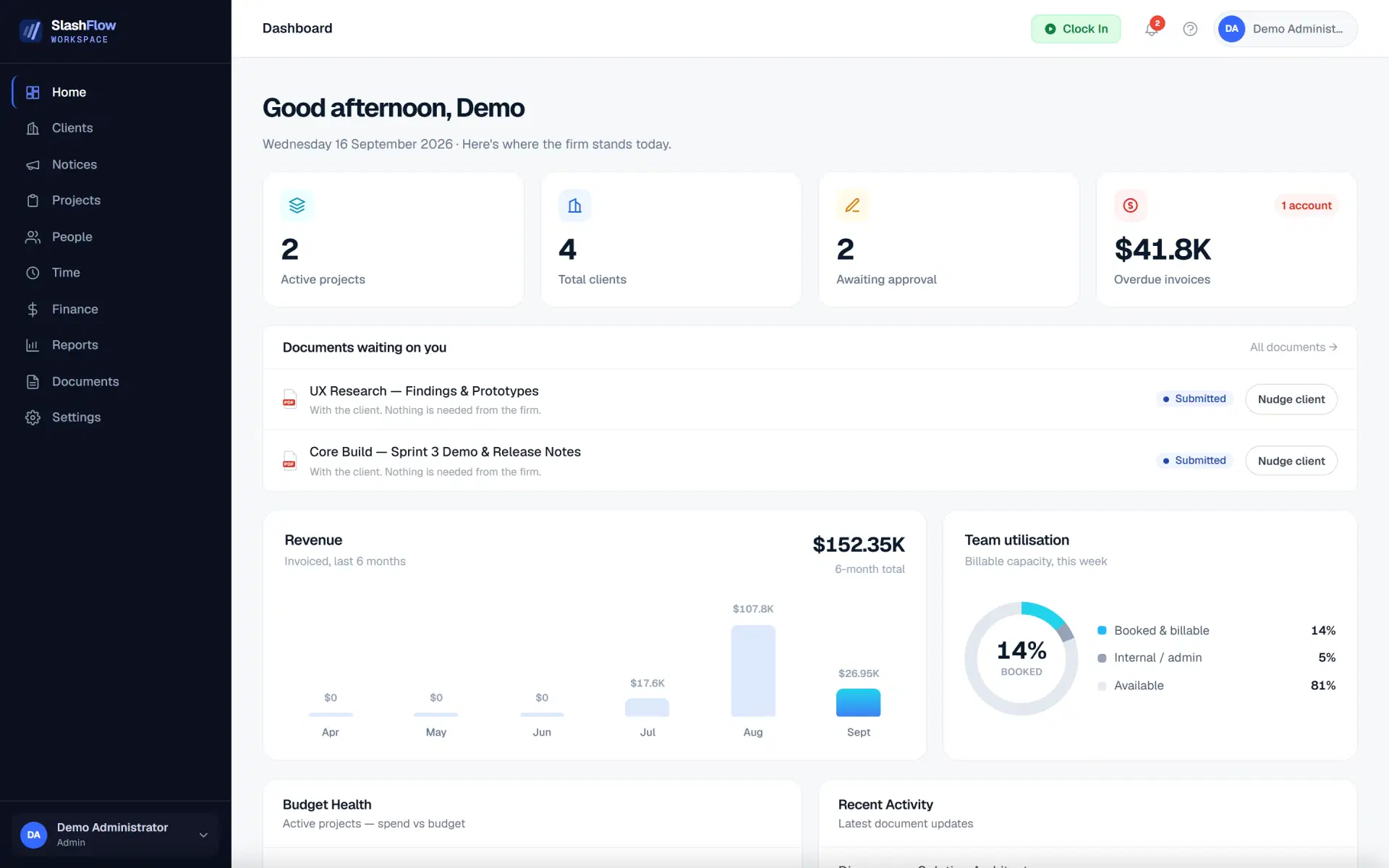
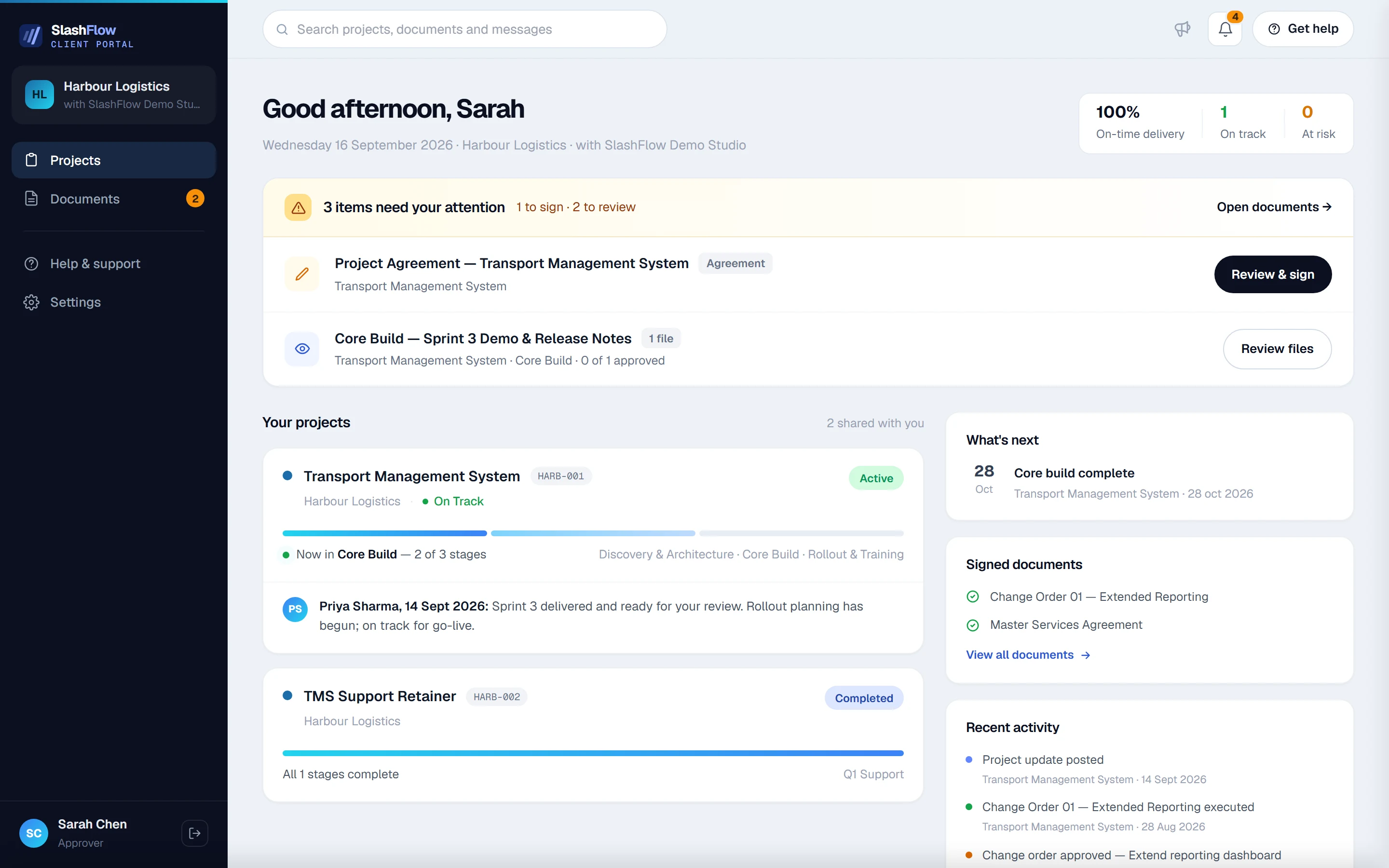
SlashFlow Workspace · Demo data
Software shaped around the work
An internal workspace for engagements, documents, delivery and billing. The starting point for SlashFlow.
See where SlashFlow beganAir Environment · Ongoing work
Automation with human judgement
Automating input preparation and output assembly so consultants can configure the modelling work and review its results.
Explore the ongoing workFlood Intelligence Network
We brought different device formats into one usable stream, giving the wider flood warning system a consistent feed to build on.
Read the flood network case studyHow the flood data connects

Early access waitlist open.
Work should move. Not wait.
We built a workspace for our own operations, learned by using it and kept improving it. Now it’s becoming SlashFlow, a product for other teams.
Register your interest on SlashFlow’s website. Access will be offered progressively.

A workaround can outlive the problem it was created to solve. Thinking differently starts with noticing the assumptions behind familiar processes, understanding why they exist and giving another approach somewhere to prove itself.
Read the field noteA conversation is a good start
Bring your idea or the problem you’re working through. A free 25-minute Fit Call helps us find a useful next step.
Already running a system? Start with our six-question assessment.
Assess your operation