
Connected hardware & IoT
Connect the field to the decision.
Sensors, telemetry and connected hardware that make site conditions visible. We connect the field to the software that uses it, so readings become information someone can act on.
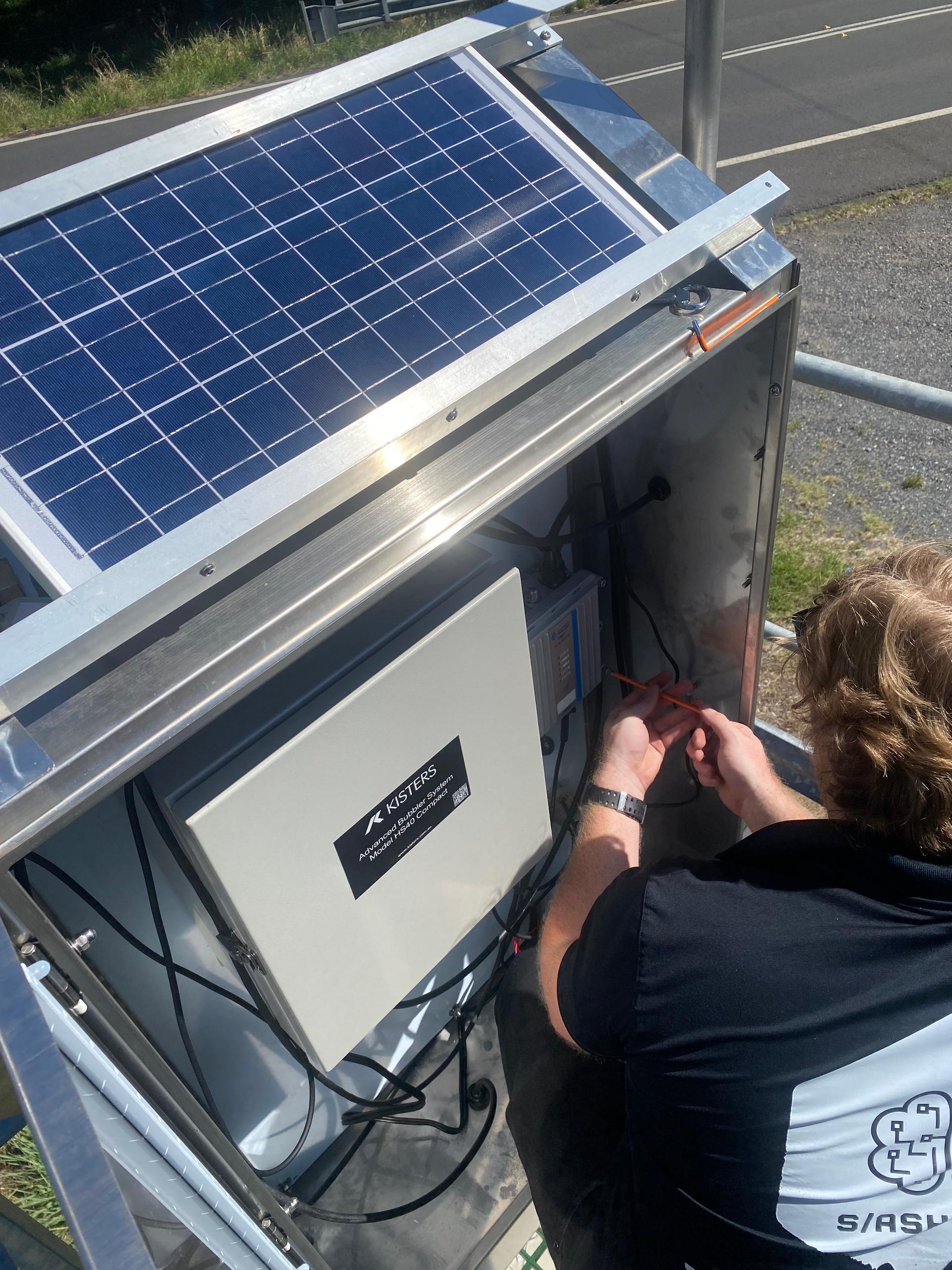 Solar powerOn-site installation
How the flood data connects
Industrial IoT & field hardware, built to be operated
Field hardware is easy to install and hard to keep running. The shape of the work we do here is everything that happens around the install — the site conversations, the records, the diagnostics that decide whether the system is still trustworthy six months later.
We visit sites before we design. Connectivity, power, access constraints, the workarounds the existing team has already settled into — these shape every later decision. Skipping the field visit means discovering them during the build, or worse, in the first outage.
How we build and hand over
We document as we go. Device identity, firmware version, calibration baseline, commissioning checklist — recorded once, kept current. When a sensor goes quiet at three in the morning, the on-call engineer needs to know whether the fault is the sensor, the gateway, the cellular link, or the power source. That decision is only fast if the records exist.
We hand over the diagnostics, not just the hardware. The team inheriting the network gets the procedures that let them separate a sensor fault from a network fault from a firmware drift. We stay through the first round of incidents. Then we hand over.
The work spans environmental telemetry, industrial monitoring, multi-protocol gateways, and remote sites where someone has to drive four hours to do anything physical. The unifying problem is the gap between installed and operated — and the baselines, records, and diagnostic visibility that close it.
From the field notes
Start a conversation
Make the next step a useful one.
Bring a problem, an idea or a system that could work better. Start with a free 25-minute Fit Call to explore the context and a useful next step.