
Software
A clearer way to work.
Custom software that brings your workflows, people and data together, so the work gets clearer instead of busier. From laboratory records to operational platforms, we build around the way your team works.
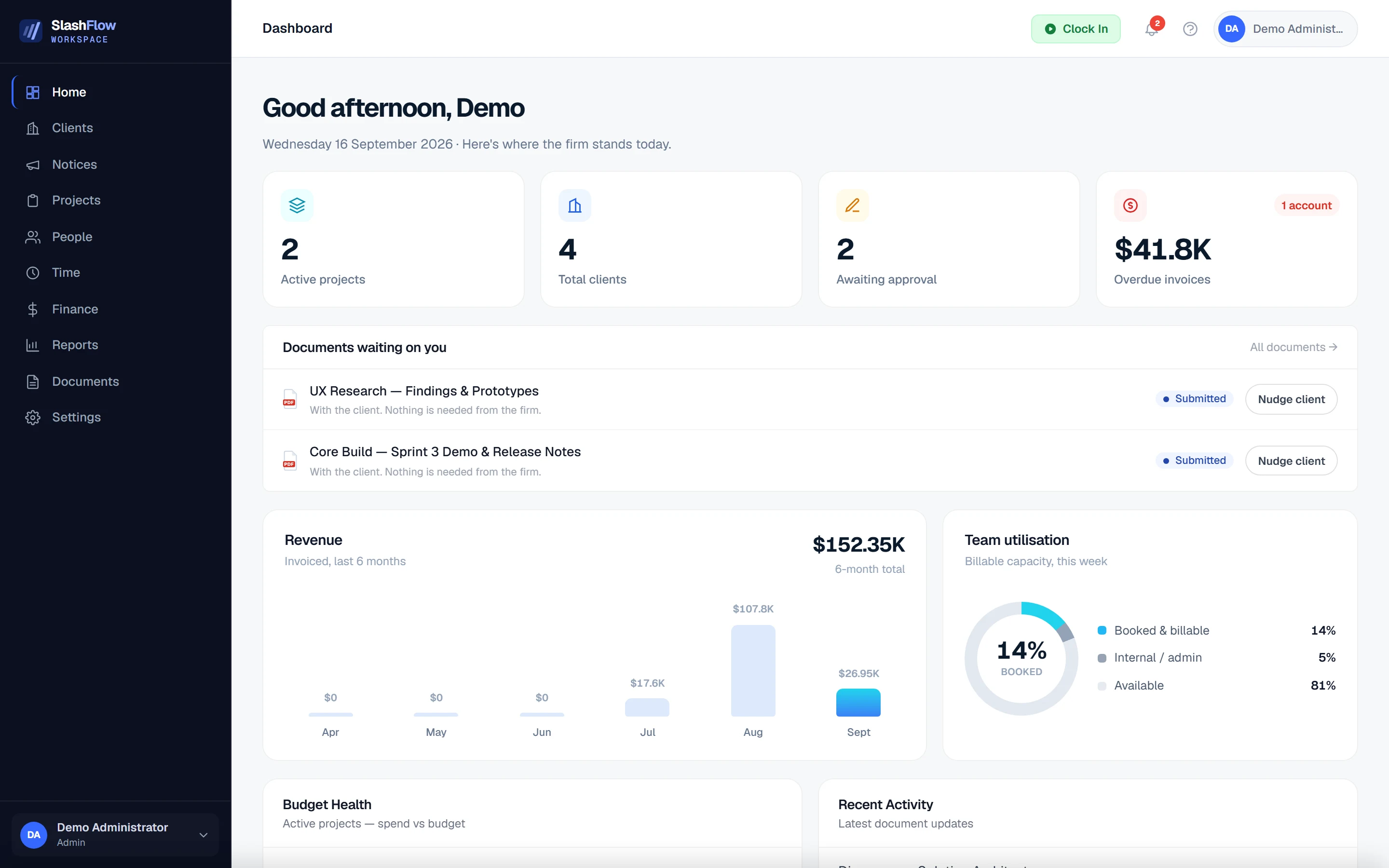
The workspace we built for our own firm, now becoming SlashFlow. Genuine interface, shown with demo data; the product is still in development.
How SlashFlow beganCustom operational software, built to be owned
Operational software is where a spreadsheet, an email thread, and one person's memory have quietly become the system. We build software that makes that work safer to do — without breaking what already works.
We start with the work, not the artefact. Copying a spreadsheet field-for-field into a database doesn't fix anything; it just changes the format. We map how the operation actually runs — including the workarounds the team has earned the right to use — and decide which parts deserve software, which need a workflow change, and which should stay as they are.
How we build and hand over
We build for the person who inherits it in year three. The architecture is one a different developer can read. The data structures match how the work actually happens. The deployment story is documented well enough that someone else can take over.
We build in slices. The riskiest workflow first, validated against real operating data, with the team that runs it in the room. Then the next. Each slice can be operated, audited, and rolled back. Big-bang cutovers are how operational software stops being trusted.
This work covers LIMS-style data systems, workflow tools, custom dashboards, reporting platforms, internal admin systems, and integration layers — the operational backend behind real businesses that don't fit off-the-shelf.
In practice
See where this work leads.
Client work · Ongoing
Laboratory Information Management System
A custom LIMS to replace spreadsheet-based lab workflows — tracking samples, test results, and reporting chains for an environmental consulting team.
Explore the projectClient work · Ongoing
Air Dispersion Modelling Platform
Workflow automation, interface improvements, and hardware experimentation to accelerate air dispersion modelling for environmental consulting teams.
Explore the projectFrom the field notes
Start a conversation
Make the next step a useful one.
Bring a problem, an idea or a system that could work better. Start with a free 25-minute Fit Call to explore the context and a useful next step.